
The Great Migration can feel complicated to plan: the herds move, the seasons shift and every month offers something different. This calm, step-by-step guide will help you plan your first Migration safari with confidence.
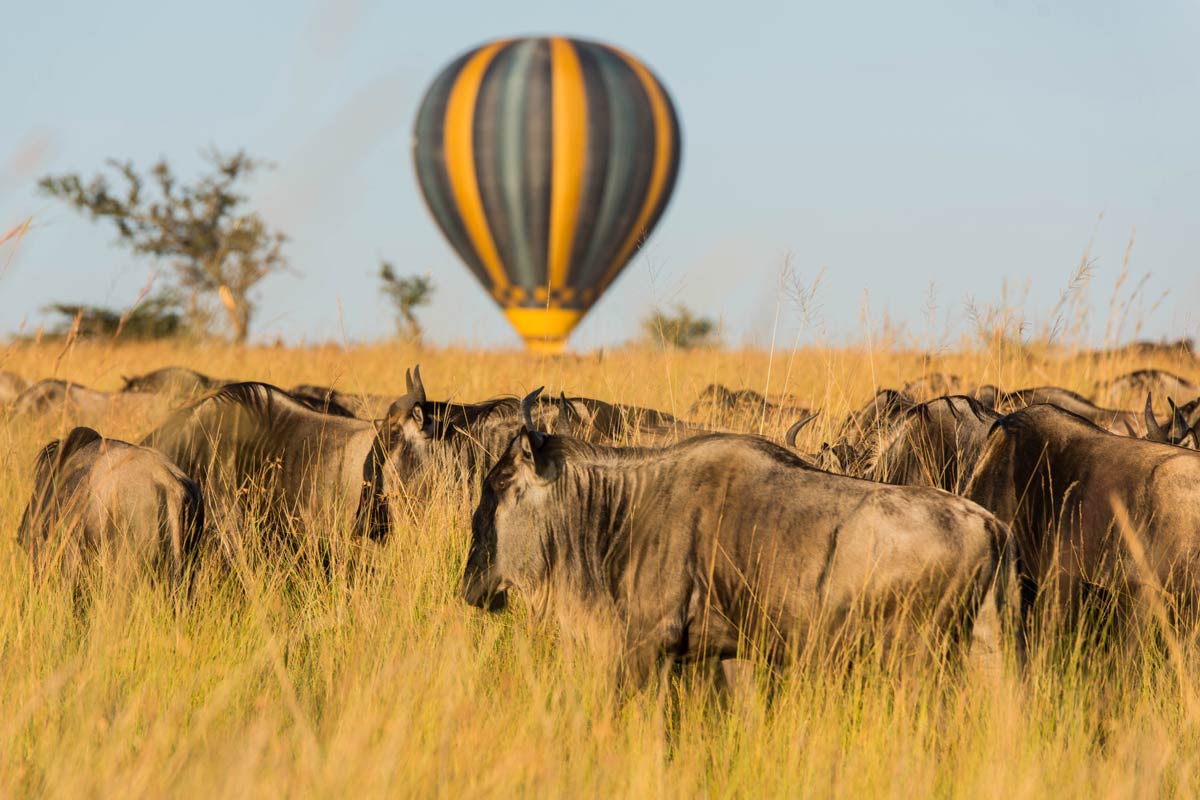
Around 1.5 million wildebeest, with zebras and gazelles, move in a loop through the Serengeti ecosystem all year, following the rains and fresh grass. There’s no single “migration moment”. It’s a continuous journey with different highlights through the year.

Because the herds move, where you stay matters more than which lodge you choose. Seasonal and mobile camps are positioned close to the Migration at each time of year.
We recommend at least three nights in the Migration area to allow for the herds’ unpredictability. Combining the Serengeti with the Ngorongoro Crater and Tarangire makes a well-rounded safari of six to eight days.
The best-located camps during calving season and the river crossings fill up many months in advance. Booking six to twelve months ahead gives you the widest choice.
Nature follows its own timetable. Rains can come early or late, and river crossings can’t be guaranteed on a particular day. Be patient and flexible, and enjoy everything the Serengeti offers: lions, cheetahs, elephants and endless landscapes are there all year.
Bring neutral-coloured layers, a warm jacket for early mornings, sun protection, binoculars and a camera with plenty of storage.
Costs depend on the season, camp style and how you travel between parks. Peak months, especially the river crossings, command the highest rates. Flying between the northern Serengeti and Arusha saves long drives but adds to the cost. The calving season often offers excellent value, with superb wildlife and slightly lower rates than peak crossing season.
Driving from Arusha to the Serengeti, via Tarangire and the Ngorongoro Crater, turns the journey into part of the safari. Flying is faster and more comfortable, especially to the far north. Many itineraries combine the two: drive in and fly out.
The Migration is magical for families. Choose lodges that welcome children, plan shorter driving days and include rest time at the lodge. Some mobile camps have minimum age limits, so check when booking.
Usually in the western corridor and the northern Serengeti, with the first Mara River crossings often starting in July.
No. Crossings depend on the herds and the rains. Spending several days in the area gives you the best chance.
Roughly January to March, with the peak usually in February, on the southern plains around Ndutu.
Six to twelve months ahead for the best-located camps in peak season.
Yes. The herds are still there, the landscapes are green and there are fewer visitors.
Permanent lodges offer solid rooms, pools and more facilities, but stay in one place while the herds move. Seasonal and mobile camps relocate during the year to stay close to the Migration, offering a more authentic under-canvas experience with comfortable beds and en-suite bathrooms. Budget camps and campsites offer great value for adventurous travellers. For the Migration, location usually matters more than luxury, so we’ll recommend camps positioned close to the herds for your dates.
Ready to see the Migration? Explore our Migration safaris or let us plan it for you.